


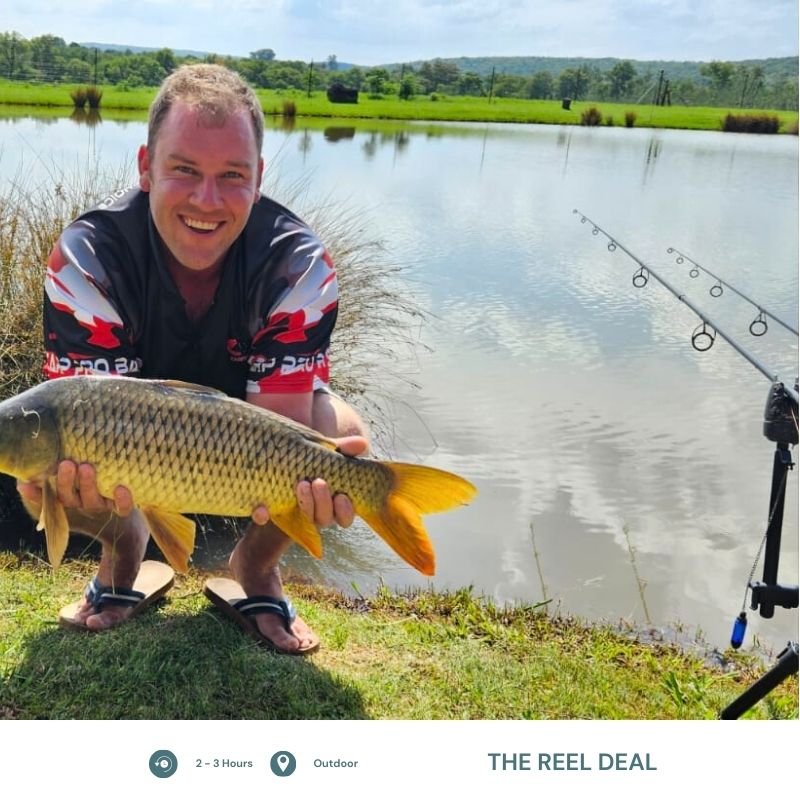
Farm dam fishing in the Magaliesberg and Hekpoort Valley is one of those activities that tends to surprise people. Visitors arrive expecting a mild diversion and leave having spent three hours on a dam bank in a state of focused contentment that they weren’t anticipating.
The combination of the mountain backdrop, the farm dam setting, the activity itself — which requires genuine presence and patience — and the particular quality of a catch in these conditions produces an experience that’s hard to replicate in any other format near Johannesburg.
What Fish Are in the Magaliesberg Farm Dams?
The farm dams in the Hekpoort Valley and broader Magaliesberg area hold several species:
- Largemouth Bass: the primary target species in most Magaliesberg dams. Originally introduced from North America, bass are now well-established in South African farm dams. They’re aggressive feeders, fight well on light tackle, and are excellent for catch-and-release. Bass prefer structures — submerged vegetation, dam walls, fallen trees — which makes reading the dam an interesting part of the activity
- Common Carp: the largest species in most farm dams, often running to 5kg and above. Carp require more patience and a different technique from bass fishing — bottom fishing with bait rather than lure fishing. The fight from a large carp is memorable
- Tilapia (Bream): very active and relatively easy to catch on light tackle and small lures. Good for beginners and children because the action is frequent. The species is particularly prolific in warmer months
- Yellowfish: where river systems feed into dams, yellowfish may be present. A distinctive South African species that’s increasingly sought by fly fishermen
What Is Catch-and-Release Fishing?
Catch-and-release is the practice of returning fish to the water after catching them, rather than keeping them. It’s the standard format at most Magaliesberg farm dam fishing properties, for good reason: it maintains fish populations, ensures the activity is sustainable, and removes the question of what to do with a catch at the end of the session.
The mechanics: fish are handled briefly and carefully, hooks are removed or barbless hooks are used to minimise injury, and the fish is held in the water for a few moments to recover before being released. Done correctly, the fish sustains no lasting harm.
For first-time fishers, catch-and-release removes one of the main barriers to engagement — the catch is the point, not the consumption.
What Equipment Is Needed for Farm Dam Fishing in the Magaliesberg?
Most farm retreat properties in the Hekpoort Valley that offer fishing provide basic equipment — rods, reels, and tackle — as part of the activity. Guests typically don’t need to bring their own gear.
If you’re bringing your own equipment, for bass and tilapia on farm dams:
- Rod: light to medium action spinning rod, 6-7 feet
- Reel: small spinning reel with 4-6kg line
- Lures: small spinners, soft plastic grubs, and surface poppers all work well on dam bass. Tilapia will take small jigs and soft plastics
- Bait: maize kernels or bread for carp; earthworms for a versatile option that works on most species
- Licence: an inland fishing licence is technically required for fishing in South Africa. Most established fishing properties manage licensing for their guests — confirm this when booking
When Is the Best Time to Fish in the Magaliesberg?
Farm dam fishing in the Magaliesberg is good year-round, with some seasonal considerations:
- Summer (October-March): fish are most active in warm water temperatures. Early morning and late afternoon sessions produce the best results. Avoid midday heat. Tilapia are particularly active in summer
- Autumn (March-May): excellent conditions. Water is still warm from summer, fish are well-fed, and the cooler air makes all-day fishing comfortable
- Winter (May-August): fishing is quieter but still productive. Bass in particular can be caught on slower techniques as they conserve energy in cooler water. The serene winter dam setting is hard to beat
- Spring (September-October): very active period as water warms and fish begin spawning behaviour. Some of the best bass fishing of the year happens in the spring
What Makes Magaliesberg Farm Dam Fishing Different From River or Reservoir Fishing?
Farm dam fishing has a particular character that makes it suitable for people who haven’t fished before as well as experienced anglers:
- Accessibility: the dam bank is flat and safe. No wading, no casting from unstable terrain
- Proximity: dam fish are often close to the bank, particularly around structures. You don’t need long casting distance to access fish
- Multiple techniques: both lure fishing and bait fishing work effectively, which means groups with different experience levels can fish in compatible styles
- Atmosphere: sitting on a dam bank in the Hekpoort Valley, with the Magaliesberg mountains behind you, African Fish Eagles calling overhead, and the morning mist lifting off the water, is an experience that fishing in an urban reservoir doesn’t replicate
At Imbabali Retreat and Venue in the Hekpoort Valley, catch-and-release fishing on the farm dams is one of the most popular activities for guests. Equipment is provided. Book your stay to include fishing, or enquire about day-visit activity access.
Frequently Asked Questions
Do I need a fishing licence for Magaliesberg farm dam fishing?
Yes — an inland fishing licence is required for fishing in South Africa. For guests fishing at established retreat properties, the licence is often managed by the property. Confirm when you book. Day licences are available from Gauteng Department of Agriculture.
Is farm dam fishing suitable for children?
Yes — this is one of the most consistently popular activities for children of all ages at Magaliesberg retreat properties. The frequent bites from tilapia in summer keep children engaged, the setting is safe, and the activity requires focus without being physically demanding. Most properties provide child-appropriate tackle.
What is the biggest fish typically caught in Magaliesberg farm dams?
Common carp regularly exceed 5kg in well-established farm dams. Largemouth bass of 1-3kg are common. Experienced anglers targeting bass on the right technique and timing consistently catch fish in the 2-4kg range in Magaliesberg dams.
Fishing in the Magaliesberg is not primarily about the fish. It’s about being still, in a specific kind of place, paying attention to something that isn’t a screen. The fish are a bonus.